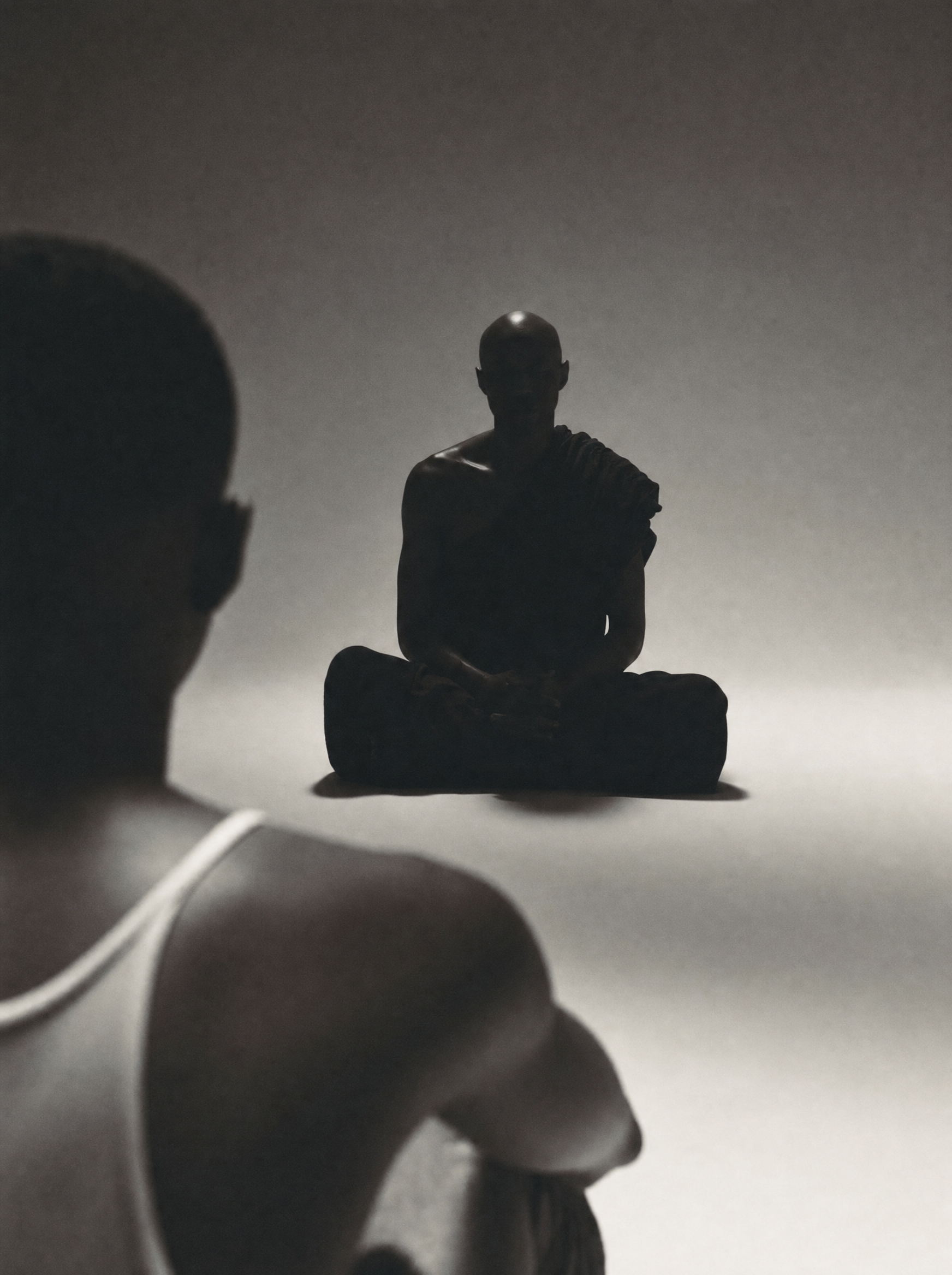
From Prescription to Perception
Domenic Ashburn · Apr 5, 2026
We have prescriptions for everything except the mind.
Nutritionists prescribe diets. Trainers prescribe exercises. Therapists prescribe cognitive behavioral techniques. Pharmacies prescribe pills. Business consultants prescribe strategies. Each of these disciplines developed the same way: centuries of accumulated expert knowledge, refined into a system that takes input from a specific person and produces a recommendation tailored to their condition.
The contemplative traditions did this first. And they did it with more rigor than most people realize.
In the fifth century, the scholar Buddhaghosa codified centuries of earlier Buddhist practice into the Visuddhimagga, a Theravada manual that mapped human temperaments into six categories and prescribed specific meditation techniques for each one. A person dominated by greed received a different practice than a person dominated by aversion. A scattered mind was treated differently from a dull one. Input the temperament. Receive the practice. This was a diagnostic framework applied to inner life, drawing on a tradition of contemplative observation stretching back to the Buddha himself.
The Bhagavad Gita carried this further. It organized contemplative life into three yogas: Jnana (knowledge), Bhakti (devotion), and Karma (action), each suited to a different kind of seeker. Patanjali's Yoga Sutras later formalized a fourth path, Raja (meditation), completing a framework the Hindu tradition has recognized ever since. The assumption across all four was that different people required fundamentally different paths. Requirements, not preferences. A person wired for intellectual inquiry would wither under a purely devotional practice. A person drawn to service would stagnate in pure stillness. The tradition recognized that the mind is not uniform, and built a prescription system around that recognition.
The Tibetan Buddhist tradition added a dimension the Gita's framework lacked: time. The Lam Rim was a graduated path that sequenced practices according to a student's stage of development. Early stages addressed foundational motivation. Middle stages trained concentration and ethical discipline. Advanced stages introduced emptiness meditation and tantric visualization. The sequence mattered. Giving an advanced practice to an unprepared mind was considered ineffective and dangerous in equal measure. The prescription had to match the person and the moment.
The Sufi tradition refined the role of the one delivering the prescription. The maqamat mapped stations of the soul that a practitioner moved through on the path toward divine union. Tawba (repentance). Zuhd (renunciation). Sabr (patience). Tawakkul (trust in God). Rida (acceptance). Each station required its own inner work, and each built upon the one before it. Teachers assessed where a student stood and prescribed accordingly. The relationship between teacher and student was the delivery mechanism, the interface through which the prescription reached the person who needed it.
Across every lineage, the pattern is the same. Observe the person. Assess their condition. Prescribe the practice that fits. The right practice, for the right person, at the right time.
For most of human history, this system worked through a single interface: the teacher. A person sat before someone who had walked the path, who could perceive what was happening beneath the surface, and who had the knowledge to respond with precision. The teacher held the diagnostic framework, the library of techniques, and the capacity to read the student. All three lived in one person.
This was the best technology available. And it had severe constraints.
Access was geographic. You needed to be in physical proximity to a qualified teacher, which meant the right monastery, the right city, the right lineage. Transmission was oral and fragile. When a teacher died without passing on their full understanding, entire branches of practice disappeared. Languages shifted. Traditions fractured. Colonization severed lineages that had been continuous for centuries. The living chain between teacher and student, which was the entire delivery system, broke in countless places across the world.
What remains today is scattered. The Pali Canon lives in academic databases. Sufi poetry circulates on Instagram without context. Tibetan visualization practices appear in weekend workshops stripped of their preparatory stages. The knowledge exists. The diagnostic framework that made it personal has largely been lost.
The modern meditation app was a response to this loss, even if it didn't describe itself that way.
Beginning in the early 2010s, apps like Headspace and Calm brought meditation to millions of people. This was genuine progress. They reduced the stigma around contemplative practice. They made the basic experience of sitting still and paying attention available to anyone with a phone. They proved there was demand for something the ancient traditions had always provided.
They also made a structural choice that defined the category: they organized practice as content. Libraries of recordings. Playlists for sleep, stress, focus. A person browses. Selects something that sounds relevant. Presses play. The app has no understanding of who is using it. A person in grief and a person in creative flow receive the same menu. A person who has sat in silence for twenty years and a person sitting for the first time see the same interface.
The prescription layer, the part the ancient traditions considered essential, was the first thing the modern world discarded.
The result is a category that has reached hundreds of millions of downloads and produces almost no depth. Retention rates across meditation apps are among the lowest in consumer software. Most users try a few sessions, feel marginal benefit, and leave. The experience is generic because the system has no way to make it specific. The teacher knew you. The app does not.
Researchers in contemplative science have spent decades working toward closing this gap. Neuroscience has mapped how different techniques affect different brain regions. Psychologists have studied which interventions work for which conditions. The academic literature contains thousands of findings about the relationship between inner states and contemplative response. What the field has lacked is a technology capable of holding all of this, the lineage knowledge, the diagnostic frameworks, the neuroscience, the individual signal from a real person, and composing them into a single coherent response at the moment it is needed.
That technology now exists.
At The Sacred Act, we are restoring what the teacher did: observe the person, understand their condition, and prescribe the practice that fits.
This requires four things, and they build on each other.
The foundation is capabilities. The atomic contemplative primitives: guided meditation, breathwork, mantra, visualization, contemplative reading, silence, sound design, binaural entrainment. Building blocks, each one grounded in authenticated source texts from the traditions that developed them. The Visuddhimagga. The Yoga Sutras. The Philokalia. The Sufi manuals of Ibn Arabi. The Desert Fathers. The Zen koans. Every practice we offer is composed from lineage.
Capabilities alone are inert. They need a world model to become intelligent. Ours has two sides. The contemplative knowledge model is the map of techniques, traditions, and diagnostic frameworks drawn from the world's wisdom traditions. It encodes the relationships the ancient teachers held in their minds: which practice serves which condition, which sequence produces which development, which tradition resonates with which temperament. The personal model is the per-user understanding built from what we can actually observe. Emotional state at the start of a session. Biometric data from wearable devices, heart rate variability, sleep architecture, stress indicators. Behavioral patterns over time. Which practices a person returns to. Which ones they abandon. Where they report shifts. This model starts simple and deepens with every interaction.
The world model, in turn, feeds an intelligence layer. This is what composes capabilities into a specific practice for a specific person at a specific moment. A user's heart rate variability has dropped steadily over three days. Their session history shows they respond well to Theravada body-scanning techniques. The intelligence layer composes a fifteen-minute session drawing from the Satipatthana Sutta's body contemplation framework, with a sound environment calibrated to their demonstrated preferences, and surfaces it before they open the app to search for something themselves.
Another user has been practicing consistently for sixty days. Their biometric patterns and session completions suggest readiness for a more demanding technique. The intelligence layer introduces a concentration practice from the Lam Rim's shamatha sequence, with preparatory framing that honors the tradition's own staging requirements.
No product manager decided to build either session. The capabilities existed. The intelligence layer recognized the moment and composed them.
Everything the intelligence layer composes reaches the person through an interface. The screen, the sound, the voice, the pacing, the negative space. This is where the practice makes contact with a human being. It must be beautiful. It must be calm. It must feel like entering a space. The interface matters deeply, and the value behind it lives in the model and the intelligence that power it.
When the intelligence layer tries to compose a practice and cannot, because the lineage knowledge is incomplete, or the biometric signal is insufficient, or a tradition has not yet been encoded, that gap is our roadmap. The relationship between the person and the practice generates the backlog directly. What to build next is never a hypothesis. It is a response to a real need the system could not yet meet.
If this is what the company builds, then the question becomes: what do the people do?
We study. We translate. We encode. We listen.
The contemplative traditions produced a body of knowledge that is both vast and fragile. Translating it into a form that an intelligence layer can work with requires scholars who understand the source languages, practitioners who have internalized the techniques, designers who can honor the aesthetic, and engineers who can build systems that hold all of it without flattening it.
The people are at the edge. They reach into places the model cannot go. They sense things the model cannot perceive: the texture of a tradition, the weight of a lineage, the difference between a technique that is merely described and one that has been practiced for a thousand years. They make the calls the model should not make on its own, especially decisions about which traditions to include, how to present them, and where the boundaries of respectful engagement lie.
A world model that cannot touch the sacred is just a database. The people ensure it remains alive.
The Sacred Act is in the earliest stages of this work. It will be difficult, and parts of it will break before they work. We are writing about it now because we believe every person will eventually need to confront the same question we did:
What does your mind understand about itself, and is that understanding getting deeper every day?
If the answer is nothing, meditation remains a relaxation tool. A few calm minutes. Marginal benefit. Eventually abandoned.
If the answer is deep, contemplative practice reveals who you actually are.
The wisdom traditions have always known this. They built systems of extraordinary precision to guide people toward that revelation. Those systems depended on a single interface, the teacher, and that interface could not scale.
For thousands of years, from the caves of the Desert Fathers to the monasteries of Kyoto to the Sufi lodges of Konya, a student needed a teacher. The question was never whether guidance was necessary. The question was whether the human teacher was the only way to carry what that guidance requires.
The Sacred Act is building what comes next.